Friday, April 17, 2020

2012 Champions League: The One That Goes All Wrong

It's ironic that maybe the greatest stretch of games in Chelsea's history kicks off with one of the more crushing losses. Going into this game Chelsea sat at fifth in the table and had gone five matches without a win before pulling out an unconvincing 3-0 victory over Bolton. Andre Villas-Boas' tenure was quickly coming to a fiery and unceremonious end, having alienated nearly every major figure at the club

Despite all of that, Chelsea still entered this game as the favorites. The Blues at least had experienced veterans they could call on, many of whom had played in 2008 Champions League final. They were playing a team in its first Champions League campaign. That alone gives Chelsea an advantage. This Napoli team had the makings of a superb squad but it wouldn't realize that potential for another few years and managers. All the same, Chelsea took a beating square on the chin here, in the first leg of the Round of 16.


Summary


Chelsea opened in a 4-2-3-1 formation. I'll talk more about the profound flaws in the lineup and tactics, but just off the bat AVB got this wrong. To his credit, John Terry was supposed to play in the match but he picked up a knock hours before. I'm not sure how much Terry could've helped against Napoli's destructive counter-attacks, but at least Chelsea would've had it's captain. The other failures are on the manager. Villas Boas dropped Ashley Cole, Frank Lampard and Fernando Torres, three experienced and talented players who could've really bolstered the squad during this match. The irony is that both Cole and Lampard would later sub on, and both performed substantially better than the players they replaced.


Napoli trotted out it's then-trademark 3-4-3. While the formation would make a wider comeback later in the decade after Antonio Conte popularized it (ironically with Chelsea), it hadn't been seen in soccer for a while. This of course leads Gary Neville to oogle over it in generic football man cliches on the broadcast: "I've played against it, and it can be tough to defend." Great analysis Gary!

The defense and midfield are a little spotty (Inler's passing from central midfield is amazing), but what really makes this shine is Napoli's front three. The Lavezzi-Cavani-Hamsik trio is absolutely devastating. Their athleticism, physicality and relentless pressure is really reminiscent of a high-end pressing basketball team. Lavezzi and Cavani really shine tonight, but Hamsik's passing holds the team and front line together in an understated way.

That front three tears Chelsea apart front the start. Within the first fifteen minutes Lavezzi and Cavani both have had excellent chances (Cavani wiffed his, Cech pulled out some great saves on the rest). 

Chelsea faced three main problems. First, the tactics and formation are all wrong. Napoli's front three play tight, with the two wingers roaming the half-spaces. Chelsea really doesn't cover those lanes at all: the fullbacks are too wide, the midfield pivot just sort of drifts around and the central defenders are too focused on Cavani. 

The second problem is more important. Chelsea simply doesn't have the personnel to keep up, especially with Lavezzi. Ivanovic gets stuck in 1v1 situations with Lavezzi far too often (partly because Daniel Sturridge refuses to track back and help), and Lavezzi burns him time and time again. Ivanovic will go on to be a key player in this run (and for the next few years), but this was one of his low points.

After the first fifteen minutes Chelsea are able to settle down a little more. They get control of the ball but really struggle to create any meaningful chances. Napoli does a good job of focusing on shutting down Mata, who was clearly the only playmaker Chelsea had, and then was pretty happy to let the Blues boot the ball down to Drogba. 

Chelsea miraculously takes the lead just before the half-hour, when Paolo Cannavaro botches an easy clearance and Mata puts the loose ball home. After that Chelsea seems like they could hold on until halftime, but then the floodgates open. Lavezzi grabs a loose ball and curls a beautiful shot home from outside the box on 39 minutes. Chelsea left Lavezzi wide open at the edge of the box, with both of the defensive pivot failing to close him down.

Anybody want to try to get near the shooter?
Napoli take the lead in first half stoppage time on a beautiful cross from Inler and finish from Cavani (his fifth goal in seven CL matches that year; this one looked preeeeettttyyy close to a handball). After the break Chelsea get nothing going, and Lavezzi puts the game away just after the hour mark. Napoli almost make it 4-1 late in the match, but Cole clears the ball off the line: Roberto Di Matteo would later call that clearance "the most important moment in our Champions League campaign." If Cole hadn't saved that goal, Chelsea would have had to score four, instead of three, in the reverse leg. Even in a stretch full of heroics, that would've been a bridge too far.

MVP

Lavezzi is the clear MVP of this match. He dominates Chelsea's backline from the start, scoring two goals and almost finishing off a couple more. His dribbling on the counter and cut-ins from the wing warped Chelsea's defense to the point where it really couldn't hold. 

What's aged the best?

There are a few potential choices here (see honorable mentions below), but I think the clear answer is this Napoli team. Aggressive, physical and impossible to handle. Although they finished fifth in Serie A this season, they defeated Juventus to claim the Coppa Italia. After spending the next few years in a state of unrealized potential, they hired Maurizio Sarri and start challenging Juventus for supremacy in Italy. After watching a season of stale Sarri-ball at Chelsea, I hypothesize that the reason his system worked so well at Napoli is because the remnants of the 2011-12 team gave it an edge and belligerence. Anyways, this team was super fun and full of hidden-gem players that you only saw in the Champions League or during summer international competitions. Plus they were sooo much fun to play with on FIFA.

Honorable mention 1: Chelsea's away kit


This black away kit was awesome. I loved the blue squares on top that slowly fade into the black jersey. The white strips add a nice edge. Also this was the first Chelsea jersey I owned, so it holds a special place in my heart.

Honorable mention 2: the commentary team


While I did make fun of Gary Neville earlier, the Martin Tyler-Neville team is really excellent and will be a part of this whole run. Their calls of the matches are a (usually) solid mix of analysis and excitement. They're the odd commentary team that aren't a complete pain.


What's aged the worst?


Andre Villas Boas. Just, the whole AVB experience. He survives a week after this game, but after losing 1-0 to West Brom Abramovich sacks him. After that he goes to Tottenham, which actually might be his greatest failure. At Spurs he tried again to do his same aggressive high line pressing defense, and again fails miserably. The really sad thing (for him) is that Spurs say, "Hey, we like that idea we just think that we can get somebody better to implement." So they go hire Mauricio Pochettino (with a brief Tim Sherwood appearance first), who does everything AVB wanted to do and does it better. 


To be completely fair to AVB, the problems that he struggled with as Chelsea manager are mostly the same ones that every other Chelsea manager struggles with that decade. The defense lacks the speed and skill to keep up with attackers, and Chelsea's attacking talent doesn't quite fit together (although he doesn't even have the benefit of Hazard's brilliance). 


He still could've done better. For starters, a good manager would've stopped trying to impose a system on the team that clearly couldn't work and instead lean into the team's strengths. Chelsea had the makings of an excellent defensive team that would generate offense through long balls to Drogba or by letting Mata and Torres dribble. They also had lots of experience and leadership in the likes of Terry, Lampard, Cole, etc. Instead of pushing those players (literally) to the margins, AVB could have empowered them (as Di Matteo would do) and maybe been able to put together a competent squad.


Best goal


Lavezzi's first goal is a beauty. It's a perfect mid-height curler that rolls along the side netting into the back of the goal. There's something so hypnotic in how perfectly he struck that ball: just the right amount of power and curl to put it in the one spot Cech could never get at. It's like a perfect back-shoulder fade from a quarterback: maybe it looks like the cornerback could've gotten the ball, but he really couldn't have.


What happened to that guy?


For this week's installment, let's take a look at Jose Bosingwa. The Portuguese fullback came to Chelsea in 2008 from Porto (for a tidy £16 million). Aside from the 2009-10 season, he notched at least 20 appearances in each of his years at the club. He was a solid rotation player, and not much more. But he's also instantly recognizable, partly by association with a certain period of Chelsea's history and partly because he has original claim on being called "The Brow." 


His post-Chelsea career is...divisive. Jose leaves the Blues for QPR, a move which attracted a fair amount of ire from Chelsea fans. But after just a year he leaves the club for Turkey, finishing his career with three seasons at Trabzonspor and a few more international call-ups. 


Since then he's effectively dropped off the radar: basic Google searches yield nothing but stat pages and decade-old articles. I suppose that could be a good thing. Many players retire and then cause enough trouble to fill a tabloid, so maybe Bosingwa is keeping his head down and living large off his well-earned money. 


Or...I mean, who just fully drops off the face of the earth after a 15-year sports career? He has no discernible social media presence as far as I can tell, which is strange in and of itself, and apparently hasn't popped up in any commentary booth or talk show anywhere. That's a little strange. Jose, you doing ok man?


Next week, we hit on the first great match and comeback of this run. 

Wednesday, April 15, 2020

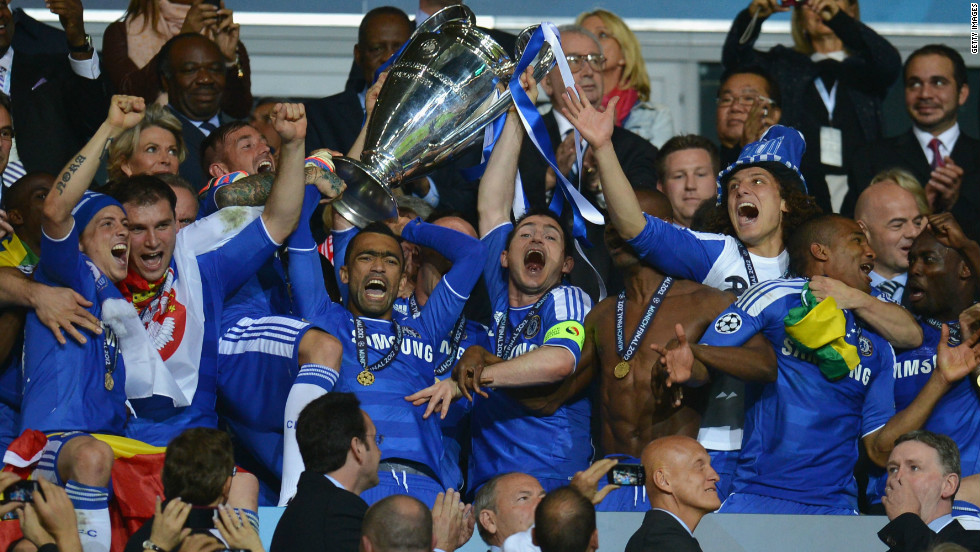
New Series: Chelsea's 2012 Champions League Run

Chelsea win Champions League after penalty shoot out drama in ...


Over a month into isolation and I've run through at least six distinct stages of boredom, only maybe four of which I knew existed before now. Desperately in need of something to do, I decided to spend hours every week watching decade-old soccer games and then blathering about them on my personal blog for a couple thousand words. Productivity!

Anyway in a pretty blatant rip-off of The Ringer's Rewatchables podcast series I'm going to be doing a series of posts, coming out every Friday, on Chelsea's run in the 2012 Champions League. I'll do a post for each game of the knockout stages (except for the quarterfinals against Benfica, which will be one post for the two legs-when the highlight of two games is a Raul Meireles goal, you know it's got to be pretty bland).

Each post will start with a summary of the game where I'll run through what happened and why. Then I'll hit a few categories: MVP of the game; best goal; what's aged the best and worst; and "what happened to that guy," a mix of the Dion Waiters and Joey Pants awards where I'll highlight one of the (many) great role players on Chelsea's squad and track their career since then.

This run is super interesting for a couple reasons.

First, it comes smack in the middle of a really weird time for Chelsea. The players (Drogba, Lampard, Terry, Cole, Cech, etc.) who had been the core of the club during the last decade were heading out the door. Starting in 2010 the club ramped up its spending during transfer windows again in an effort to replace that core group (between 2005 and 2009 Chelsea spent just $65 million or so every window, a paltry sum compared to what Abramovich is known for). Between 2010 and 2014 the club spend well into the hundreds of millions every summer trying to find new talent, especially offensive players (like Eden Hazard, Willian, Oscar, Juan Mata, and Fernando Torres).

Even as Chelsea looked for fresh talent they also tried to revamp their on-field identity. Even though Jose Mourinho had left the club in 2007, his pragmatic and pessimistic defensive style had lingered on after him. As Barcelona's attacking play swept the world, Abramovich (like so many others) looked around and said, "I want that." So he hired Andre Villas-Boas (a really yikes decision that I'll unpack more later). AVB (despite being in the Mourinho coaching tree) promised to bring a new, more aggressive style of play to the club. Part of that transition would involve ushering out the old players, who had neither the legs nor the interest in the young manager's opinions.

In many ways the 2011-12 season unintentionally became the last hurrah of the core that Mourinho formed. Drogba, Lampard and Cole were all gone within the next two years. Cech and Terry lasted longer (partly due to club legend status in Terry's case), but they didn't impact the club after Munich like they did before it.

Second, it was ridiculously improbable that Chelsea could have actually pulled this off. All due respect to 2015-16 Leicester, but I think that this Champions League title is the most surprising soccer run of the decade and maybe ever. This was, by far, the worst team of the Abramovich era up to that point. No squad had finished worse than third and with fewer than 70 points; this team dropped to sixth on 64. It is the second worst league performance of any Chelsea team since Roman took over (2015-16's squad finished tenth on 50 points, although I think that team was better than this one and really only collapsed because Mourinho went full Mourinho in December).

2011-12 Chelsea was a pot-pourri of aging stars and journeyman role players. The team got big performances at just the right times (especially from Drogba and Cole), but for the most part it struggled to put together a consistent stretch of quality play.

On top of that, Chelsea ran a gauntlet to lift the trophy. In the semis they beat Barcelona, who the year before had won the Champions League (and the treble) in one of the most impressive 90 minutes any team has played. In the finals they beat Bayern Munich (in Munich!), who the very next year would win the treble. I'll talk more about just how good those teams in later posts, but it's insane that Chelsea beat both teams on the road in major matches.

Third, these games are just plain fun. There are so many memorable moments from this run: the second leg comeback and extra time at the Bridge against Napoli; both legs of the Barca semi, but especially the second half of the second leg; and of course the incredible final. I'm genuinely really excited to revisit these games, partly because I have such clear memories of watching them all the first time around.

Wednesday, January 4, 2017

Fiorentina vs. Napoli: Match Analysis

Italy is often thought of as the great defensive country. Many of the great defensive tactics and systems were developed in Italy: catenaccio in the 1960s, with Herrera’s “Grande Inter” teams; compactness and pressing, with Sacchi’s two-time European Champion Milan teams. In the 1990s Italy gained a reputation, both within Serie A and on the international stage, as a league of great defenders and defenses.

Defense and Italy are nearly synonymous. But many times we forget that Italy has produced great offenses. Sacchi’s Milan were equally adept going forward as they were in defense, scoring five goals on Real on the way to their first European Championship. Maradona, Zidane, and the Brazilian Ronaldo all plied their trade in Italy. While the Italians may be known for defending, they can turn a great offensive performance in. While Serie A may be known for its defensive showdowns, the league can produce some great offensive matches as well.

The matchup between Fiorentina and Napoli was a perfect example. Both teams were aggressive and attacked throughout the match, creating an end-to-end, wide open game. It was fascinating 6 goal thriller, with both teams exhibiting fascinating tactics.

Lineups


Napoli Dominate the First Half
Napoli controlled the match throughout the first half, while Fiorentina looked unsettled and uneasy despite being the home side. Maurizio Sarri’s team was able to boss Fiorentina around with a combination of high intensity defense and strong positional play when in possession.

During Fiorentina’s build up Napoli put on a high, intense, man-orientated press. They were so man-orientated that sometimes the press resembled more man marking than a zonal system. To cover for the risk of high man-orientation, as well as their high defensive line (often playing in Fiorentina’s half), Napoli played with a ridiculous amount of intensity, putting enough pressure on the ball to ensure that Fiorentina wouldn’t have enough time to find the open space behind Napoli’s press.
Napoli's man orientated press
Napoli’s press was effective in destabilizing Fiorentina’s build up play throughout the match, especially in the first half. Sarri’s team were able to take advantage of Fiorentina’s insistence on slow, deep build up through passing and combinations, shutting the Viola’s attack down. Later in the match, Fiorentina was able to beat the press by playing more direct, taking advantage of Napoli’s high line.

When Fiorentina were able to push past Napoli’s press and into the middle of the field, Sarri’s men dropped into a 4-5-1, with both wingers dropping into the midfield. While playing this formation statically would rob Napoli of access to the ball, Sarri adapted it to provide greater pressure on and access to the ball. The midfield 5 chain acted as a pendulum, swinging whenever the ball shifted to one side. When Fiorentina played the ball to the right wing, the ball side winger (Insigne) stepped onto the first line, alongside Mertens (Napoli’s striker), to pressure the ball and force it back to the centerbacks. The rest of the midfield shifted over, with the nearest central midfielder becoming a wide midfielder and so on. When the ball moved back, Insigne would return to the midfield line. The same would happen on the other side, with Callejon stepping up. This created an asymmetric 4-4-2 that provided good defensive access and put strong pressure on the ball.


A similar action happened when Fiorentina moved the ball into midfield. With a three-man central midfield, one of Napoli’s central midfielders could step up and pressure the ball without leaving space behind. The other two central midfielders simply shifted into the open space, creating a 4-4-1-1. This allowed Napoli to pressure Fiorentina anytime they brought the ball into the center of the field, forcing it out to the backline.

During the extended periods when Napoli played with a 4-4-2, if Fiorentina held the ball on the wing, then the central midfield was often staggered. With Fiorentina often focusing their attacks down Callejon’s side, and thus with Zielinski shifted outside, Diawara and Hamsik occupied the center. They would stagger their movements, with one dropping deeper whenever the other stepped up to pressure a man. Mostly this was to cut off potential passing options into the center, but it sometimes worked to lure Fiorentina into bad passes and then catch a quick counter attack.

While Napoli’s press disrupted Fiorentina and forced turnovers, Napoli’s deeper defense simply stopped their offense from working. Fiorentina was stalled without any options to progress on the ground, and were reluctant to try to pass over Napoli. Napoli were able to dictate where Fiorentina could play the ball, forcing them out of the center and the wings. This left Fiorentina to shift the ball between their two center backs, hopelessly looking for passing options.

Napoli’s offense also played a key role in controlling the match. Strong positional play has featured in Napoli’s attack throughout Sarri’s year and a half in charge, and this game was no different.

Both Insigne and Callejon played inside of the wings, in the half spaces, acting as inverted wingers in a similar way that Hazard and Pedro (or Willian) have in Chelsea’s successful 3-4-3 formation. This created numerous opportunities for combinations when Napoli had the ball.

It also allowed Napoli to overload either side of the field. With the fullbacks pushing high to provide width, and multiple players both deep and high in the halfspace, Napoli were able to overload Fiorentina and manipulate their opponents to open up space. When they found open space Napoli often used aggressive vertical passes to break Fiorentina’s lines and create chances.

Napoli’s buildup was varied in speed. At times they used long, vertical passes to quickly hit Fiorentina.

Other times they were much more patient, stringing together passes and slowly looking to open Fiorentina up.

Both ways exposed Fiorentina’s defensive inadequacies. Throughout the first half Napoli was able to open their opponents up fairly easily, but only scored one. A combination of a few offside players, some timing that was just off, and poor finishing held Napoli back from scoring more.

Fiorentina Fights Back
It was clear from the start of the second half that Fiorentina was not going to lie down. They put on their own man-orientated press, and began to play higher up the field. Fiorentina then matched Napoli in intensity, and it paid off. The visitors seemed unsettled, and after 6 minutes and a fortuitous deflection on a free kick, Fiorentina was level.

Napoli settled back into the game, and then retook the lead in the 68th minute. But less than 60 seconds later they had given away another goal. Bernadeschi, with his second of the day, scored a whopper from 40 yards out, and although Reina should have done better it is tough to criticize Napoli for the goal out of context. In context it was unacceptable. Twice Napoli had taken the lead, and twice they had given it away.

Fiorentina then took the lead on a beauty of a goal from Mauro Zarate with less than 10 minutes left in the game. At that point Sarri threw caution to the wind, and Napoli pushed forward with everything they had. Just when it looked like Fiorentina might hold out, Napoli won a penalty. With the second to last kick of the match, Napoli pulled level, at 3 all.

Conclusion
From the standpoint of a neutral, this game was thrilling. 6 goals, end to end and wide open, the two teams both played with reckless abandon. It was a reminder that Serie A is still one of the most entertaining leagues in the world.

Undoubetdly Napoli and Sarri will be incredibly frustrated with the result. They dominated the match, were the better team throughout, and yet had to claw back a draw. The game played into a greater trend of Napoli’s season: that they can grab a lead, but not hold on to it. Napoli haven’t been able to shut games down. It isn’t that they can’t; it’s that they won’t. Sarri doesn’t want to shut games down, but rather keep them open and a little chaotic. While this creates fantastic games for the neutral, it often leads to Napoli letting leads slip out of their grasp. All the more frustrating for Sarri will be the three goals Fiorentina scored. The first was a deflected free kick; the second a 40-yard whopper; the third a volley on the edge of the box, off a beautifully floated cross. All three are nearly impossible to defend, or lucky, or some combination of the two. Napoli dominated the match and yet gave away three goals on low quality chances. This should have been three, desperately needed, points for Napoli, and yet they walked away with a draw. Sarri and Napoli clearly have some thinking and self-searching to do.

Wednesday, June 8, 2016

Copa Round One Wrap Up

I'm a couple days late, but these are a some assorted thoughts on the first round of group games in Copa America.

Mexico's Offense
Easily the best game of the first round, Mexico-Uruguay was thrilling and intense. The flow of the game shifted several times, with Mexico dominating the match aside from a 20-30 minute period early in the second half. Uruguay was able to claw their way into the game, after going a man and a goal down, but the energy they spent to do so was unsustainable, and they eventually cracked (mentally, physically and tactically).

Mexico was fascinating and massively impressive. They frankly looked like the best team in the tournament (and maybe all of the Americas), including even Argentina (not so sure about this, but it's pretty close). Juan Carlos Osorio had the team playing like a club side that has trained together for months, and it was stunning.

Their build up shape was what most interested me. Their nominal lineup was a 4-3-3,

But Mexico played a much more fluid and dynamic formation than it appeared on paper. The most notable and confusing movement came out of defense. Reyes, the left center back, pushed into midfield, while Rafa Marquez, the nominal pivot, dropped back; they effectively traded roles. Moreno, at left back, played a little more centrally, while Araujo at right centerback pushed out wider. Layun moved into midfield, leaving a back three of Moreno, Marquez and Araujo. This is sort of what resulted.
However, this is just a snapshot of a moment. The midfield and forward lines were very fluid, with much freedom of movement. As Istvan Beregi points out, the formation occasionally appeared as a 3-1-4-2, which had its benefits...


and its shortcomings.


In the first half, Mexico dominated the match, completely outclassing Uruguay. They shut off for a while in the second, but once they needed a goal to win, they once again pinned Uruguay back. It isn't often that a great defensive team like Uruguay, with a defensive core from Atletico Madrid, is torn apart like they were in the first half. I'm super excited to see Mexico's other games, and see how they pan out.

Argentina's Counter Attack
The second best game of the first round was Argentina-Chile. Although Messi was left on the bench, recovering from injury and a trans-Atlantic flight, Argentina won the game easily.

Chile held most of the ball, particularly in the second half, but had some build up issues (see linked article), as well as the Argentine defense. Argentina, in a different role from normal, spent much of the game, after the first 20 minutes, defending and looking to break out on the counter attack. It was a strategic move that suited the Argentine side very well.

Chile were especially vulnerable on the flanks, where Angel Di Maria especially found great success attacking for Argentina. Even though they were defending, Argentina weren't passive at all, pressing Chile's center backs and disrupting their build up play.

The second half especially was a master class in counter attacking, as Argentina quickly broke from turnovers to win chances on goal. Chile's build up shape, with 3-4 players on the front line, put them in a poor position to counterpress, leaving the backline vulnerable to counters.

I'm interested to see whether Argentina continue to play more on the counter in the future. With Messi returning, and facing opponents who will likely cede possession to Argentina, I would expect Argentina to play more possessive soccer. But I would love to see more of the strategy from Argentina that we saw against Chile, most likely in the later stages of the tournament.

Poor Turnout
A lot of the talk from the first round has been on the quality of games, and the empty stadiums watching them. People have been wondering why the games have been more boring and defensive, especially given the pre-tournament hype. I think one of the most important reasons is the lack of down time between the end of the club season and the start of the tournament. The Euros are starting a whole week later, giving extra time for teams to train and players to rest. Players in Copa may simply be worn out, and not have the energy to slave through 108 degree weather in Orlando.

The low turnout at stadiums may be due to a lack of excitement about the competition. I mean realistically, how many people want to spend their Saturday afternoon watching Paraguay-Costa Rica or Haiti-Peru? It doesn't help that this tournament is largely viewed as a bunch of friendlies strung together, at worst, or a nice trophy at best. I think people simply aren't excited, and the lack of exciting play (outside of two games) doesn't help.


Saturday, June 4, 2016

Copa America Day One

I will be *trying* to do a wrap-up of each day of soccer action this summer, between the Euros and Copa America. I won't see every game, so I'll post about the ones I did see.

The opening day of Copa America Centenario featured the hosts, the US, and Colombia facing off in Santa Clara, California. It was a slightly disappointing game, as both teams failed to create good chances out of open play. However, the match was still interesting tactically and in a greater sense. Full confession, as an American I can't help focusing on my team. This post will greatly focus on the US team, but I'll try to talk about Colombia some.

American Build Up Play
One of the most interesting (and encouraging) aspects of the game was the US team's build up play. While Colombia dominated the first 10 minutes of the game in possession, after they scored in the 9th minute on a corner, the Americans increasingly controlled the match. For most of the first half after Colombia's first goal, the US had the ball and dictated play.

A big feature of this build up was the use of vertical passing. Colombia defended in a 4-4-2, with the two strikers fairly narrow to keep Michael Bradley, in the pivot, off the ball. This opened up room in the half spaces for John Brooks and Geoff Cameron, the American center backs, to dribble into and make passes. The inward movements of both American wingers, Gyasi Zardes and Bobby Wood, as well as the two wide midfielders, Alejandro Bedoya and Jermaine Jones, opened up targets for passing.

The Colombians didn't do a fantastic job of stopping these movements and passes, although they were able to spring traps on a few occasions, like the one below.


However, the Americans for the most part were able to get around Colombia's defense in midfield, particularly in getting the ball to Bradley, as the deep lying playmaker. With the front 2 blocking immediate access to Bradley initially, the centerbacks often shifted the ball between themselves, or out to the fullbacks, to open the Colombians up.

Often Clint Dempsey, as the striker, would drop off the front line into the 10 spot, left open by the US. This opened a vertical passing lane for the centerbacks, and Dempsey, when he received the ball, would often lay it off to Bradley, working around Colombia's defense. The clip below shows just such a move, as Brooks passes to Dempsey, who lays it off to Bradley.

Both team's focus on Michael Bradley, offensively and defensively, demonstrates how important he is to the US. Much of the debate about the national team in the past two years has focused on where Michael Bradley ought to play. Jurgen Klinnsmann has tried him in a more advanced role, a no. 10, but Bradley was ineffective and marginalized there. Klinnsmann then moved him back, deeper into the midfield, where Bradley plays best. 

Against Colombia, however, Bradley was horrid. I am more optimistic about his build up play in the game than many other people are, but it wasn't what the Americans needed. Offensively, much of the Americans play did end up going through people other than Bradley, and I felt that when he did have the ball he was too slow and indecisive to make an impact. Defensively he made several key errors, including the turnover that lead to Colombia's second goal. He fouled in very odd places, and looked somewhat out of sorts.

USA Defense
Defensively I was also impressed with the US. They were set up well, and gave the Colombians very few chances. Indeed, both goals came out of set pieces, although the penalty was the result of some poor open play defending.

The US defended high up the field in a 4-3-3. They were fairly compact through the center, and front to back, as the backline pushed up, nearly to the midway line. However, the front 3 of the US team didn't put any pressure on the ball. This is partly due to Colombia having a 2 v.1/3 v. 1 overload in the first line, and also due to Dempsey's age and lack of energy. But America still did a poor job of pressuring the Colombian's build up, until the ball progressed into midfield.

There you can see how high the front 3 for America are, yet they are not pressuring the ball. Dempsey was particularly relaxed, and I think Klinnsmann would have been wise to take Dempsey off instead of Bobby Wood (see below).

Deeper into the field, the US would occasionally drop into a 4-4-2, particularly with the ball on the wing. The image below demonstrates this: the midfield three has flattened, with Jones shifting out to the wing. Meanwhile, the ball-far winger (Zardes) has dropped into the midfield line, leaving two attackers up front.

Overall the US defended very well. The Colombians had very few chances from open play, and James Rodriguez, always a threat, made very little impact on the game. The backline particularly impressed me. I really liked the Brooks-Cameron partnership, and although Cameron falling asleep let Colombia score their first, both centerbacks were very good.

Colombia
I've said most of what I have to say about Colombia already, but there are several things I haven't mentioned. Firstly, this was not a match for Colombia to be proud of. There has been talk that Colombia "dominated the game without the ball." I couldn't disagree with this statement more: Colombia did not put in an Simeone-esque performance, dictating where the offensive team would play. Although the Americans struggled to create chances and covert good build up to good attacks, this is prominently due to American problems, not Colombian defense. Colombia's defense was open very often and did a poor job of covering the half spaces.

In possession, Colombia weren't much better. They struggled to play through America, and although they were slightly more successful than the US in terms of chance creation, they struggled there as well. In the end, Colombia executed of a set piece better, and then won a penalty, and that's how they won the game. 

Conclusion
This was obviously a very disappointing result for the US. Depending on how the Costa Rica-Paraguay game goes later today, the result could be slightly better or worse. But, in terms of underlying factors, I was more optimistic. Bradley *should* play better than he did today, and the US did a good job of getting him the ball. I liked the midfield trio, and thought they did a good job facilitating build up. The front three were disappointing, and since all three are central forwards, they often neutralized the others strengths. The defense was impressive, especially in terms of the backline, and I think as they clock more minutes in together they will get better. 

The major problem for Klinnsmann coming out of this game (other than the result) is that of offensive personnel. The US seriously lacked creativity and chances against Colombia. He could start either one, or both, of Christian Pulisic or Darlington Nagbe, two no. 10's. But he needs to make a change, because America's attack was poor. 

The US is not out of this tournament, but the loss puts them into a very tough position. The pressure on Klinnsmann is rising, although I personally believe that he coached a decent match. I think some of the pessimitic responses to this match are simply cyncical, and while it was not a good result, the positives are pretty clear. This was one of the first times we've seen America play something resembling the possession based, attacking soccer Klinnsmann promised. The good build up play shows the foundation of this soccer are being laid, and I think that should be encouraging.


Monday, May 30, 2016

Best Matches of Copa America Centenario: Group Stage

The celebratory 100th Copa America starts on Friday, and although it won't be as intense as the Euro's (starting next week), it should promise to be interesting at the least. And while Neymar isn't making the trip, many other big stars, including Suarez, Messi and Aguero will be at the tournament. Teams, particularly the South Americans, may not see the Centenario as a must win deal, but they do see it as a potentially nice trophy (especially Argentina, who can't be picky after 23 years without a senior trophy).
Image result for copa america groups

The three weeks of the group stage are packed with interesting games, and as the tournament gets going and we see how teams are playing, there could be more and more. I'm looking at what *right now* are the best games of the group stage.

USA v. Colombia (June 3rd, 9:30)
The opening match of the tournament, in Santa Clara. USA have tons to prove, as the hosts and in general. Obviously, as host nation, USA wants to put out a good showing, and prove to the South Americans that they can run with real teams. This tournament also provides a good chance to build on the success of the 2014 World Cup, when the US barely lost in the Round of 16, 2-1 to Belgium in extra time.

For Jurgen Klinsmann though, this tournament provides a chance to relieve some pressure. Between a fourth place finish at the Gold Cup last summer, losing the chance to automatically qualify for the Confederations Cup, a major goal for Klinsmann, and then a loss in the Confed Cup playoff to Mexico, and then struggles in the early stages of World Cup qualifying, and then the failure of the U-23 team to qualify for the Olympics, 2015-16 has not been a great year for Klinsmann. If the US could make a run in this tournament, and maybe even win it, then Klinsmann would find some breathing room. Winning the first game in a somewhat tough group (with Costa Rica and Paraguay) would be a massive step in the right direction.

Colombia is also looking to build on recent success. Two quarterfinal places, in the World Cup and then last summer's Copa America, vaulted Colombia back into the international spotlight. Although Falcao, Jackson Martinez and several other veterans will be out, Colombia will still have David Ospina in goal and James Rodriguez, Juan Cuadrado and Carlos Bacca in the field. They won't be lacking in talent.

This should be an interesting game tactically and individually. It will be intriguing to see how the US copes with Colombia's outstanding individual talent.

Mexico v. Uruguay (June 5th, 8:00)
This match pits the two front runners in Group C. Mexico, with the easiest travel schedule in the tournament, will be looking to redeem themselves from a bad appearance at Copa America last summer. Juan Carlos Osorio was named manager in October, and this is his first chance to succeed with Mexico on the national stage.

Uruguay, on the other hand, has sent their A-squad. Diego Godin, Luis Suarez and Edison Cavani will all be there.

Both teams will want to beat their main rival for the group in this first game, and get out to a good start. Definite must watch.

Argentina v. Chile (June 6th, 10:00)
Easily the best match of the group stage. A rematch of last year's Copa America final, you can make the case these teams are the best in South America right now. Both teams have also brought the big boys. Arturo Vidal, Alexis Sanchez, Claudio Bravo and Charles Aranguiz will all be playing for Chile. Argentina, on the other hand, will have one of the scariest attacking lineups in the world: Gonzalo Higuain, Sergio Aguero, Angel Di Maria and one Lionel Messi. Although they have defensive concerns, Argentina should be thrilling going forward at least.

This match is not just the most interesting individually, its the most interesting tactical battle. Chile, with the Biesla-esque tactics, is always fun to watch. How Tata Martino meshes all of Argentina's talent, where he places Messi, and whether he tries to adopt the higher, more aggressive system that Messi has thrived under at Barcelona are all issues Martino needs to deal with. This tournament should give him good preparation to experiment, looking forward to the 2018 World Cup.

Honorable Mentions
USA v. Costa Rica (June 7th, 8:00), Argentina v. Panama (June 10th, 9:30) and Colombia v. Costa Rica (June 11th, 9:00) are all interesting matches. Costa Rica will be looking to prove that their performance at the World Cup in 2014 was not a fluke, and Panama will be looking to build on a strong 3rd place at last summer's Gold Cup. Some matches may be fun blowouts, like several of Brazil's potential games, and some may end up close (Brazil v. Peru, Mexico v. Venezula).

One last mention for the potential quarterfinal draws. If Mexico and Uruguay come out of Group C, and Chile and Argentina from Group D, then we are facing some fantastic quarterfinals. We'll see any combination of Mexico/Uruguay v. Chile/Argentina in the quarterfinals, and both will be amazing. Something to look forward to there.

Overall, I'm very excited for this tournament. As a soccer fan, it's a top to bottom interesting tournament. With all the major South American teams, and most of them trying, in it, as well as good CONCACAF teams, it won't be a joke.

As an American, I'm pumped. This is a great chance for players to prove themselves (looking at you, Christian Pulisic). It's a great chance for the team overall to prove themselves. Great chance for Jurgen to relive pressure. Great chance to prep for the Confederations Cup World Cup in 2018. Great chance to finally nail down a system that works, and a rough XI that fits into it. Good chance to test ourselves against big teams, something we'll miss since the whole Gold Cup thing didn't work out.

It should be a fun sideshow to the Euro's, but it'll be more than just a sideshow. This is gonna be a fun summer of soccer.

Saturday, May 28, 2016

2014 Champions League Final: Match Analysis

Image result for angel di maria champions league final
In light of the upcoming La Liga match Champions League final/Madrid derby, I decided to go back and rewatch the 2014 CL final between the same two teams. It was a fascinating match, with two great managers (Simeone for Atleti, Ancelotti for Real) facing off. Although Real ended up winning 4-1, the game was infinetly closer than the scoreline indicates. Real dominated much of the game, controlling the ball and creating more and more chances as the game went on. Atleti, however, gave a masterclass in defensive discipline, and until they ran out of energy kept Real fairly frustrated.

Lineups

Real was without their normal pivot, Xabi Alonso, and Sami Khedira was in doubt after being out for half of the season. Khedira was able to make it back into the lineup, although he only played the first hour. Ancelotti lined Real up in a 4-3-3, with Khedira in the pivot. Angel Di Maria and Luka Modric played on either side of him, although neither stayed close to Khedira. Both, but especially ADM, drifted outside, to balance the inward movements of Real's wingers, Ronaldo and Bale.

Atleti set up in their classic 4-4-2. Their defense, and change to 4-5-1 later, will be discussed below. Diego Costa, in doubt because of a hamstring injury, insisted on playing. Costa only made the first 10 minutes however, costing his team a sub that was desperately needed later in the game.

Real's Buildup
Ancelotti made some interesting tweaks to Real's normal 4-3-3. Without Alonso to stabilize possession, Ancelotti went for a more aggressive, direct approach. Many times either Sergio Ramos or Raphael Varane would play long balls directly to one of the attacking 3, bypassing the midfield. This allowed Real to go over Atleti's strong midfield presence, and with all 3 forwards skilled in the air, it was a somewhat effective strategy.

The midfield 3 were also very uncompact in possession. Both Modric and Di Maria pushed out wide. This balanced the inward movements of Bale and particularly, on Di Maria's side, Ronaldo. The strategy seemed to play into Atleti's hands, as they seek to force teams away from the middle, but Real used wing overloads to break into the center, especially in the final third.

Real also played with asymmetric fullbacks for the first hour of the game. Coentrao on the left pushed very high up the field, while Carvajal stayed deeper, although he did contribute to the offense.

What resulted from the movement on the left was an interesting triangle forming. Ronaldo made runs into midfield, playing mostly in the half space, although he had the positional freedom to roam the field at large. Coentrao pushed high, filling the wing. Di Maria dropped back to fill in Coentrao's open space at full back, while still playing a vital role in the build up.


Here you can see the triangle clearly. Di Maria is deep, Ronaldo is in midfield, and Coentrao is in the attacking line.

There you can see the benefits of the triangle. It created an overload, numerical and qualitative, on the left side, and was difficult for Atleti to deal with.

Much of Real's game up was based on giving Ronaldo, and Bale to a lesser extent, a free role, to float around the field and stay in a dangerous position. The movements of the midfielders, fullbacks and Benzema were all supposed to balance out Ronaldo's free role. Even Bale played around Ronaldo, staying to the wing more when Ronaldo drifted over to the center and right half space.

Atleti's Defense
I wrote a fairly in depth analysis of Atleti's defense in my analysis of their loss at Barcelona this season, so take a look at that for more. But Simeone has changed his defense slightly in the past two years, so its worth taking a look at the differences in this game.

Atleti was much more passive two years ago, in defense, then they are now. Against Barcelona, and against Bayern in the Champions League semifinal this year, Atleti pressed higher up the field, forcing the possession based team backwards and using pressure to disrupt their buildup.

In this game, however, Atleti very much sat in their own half and allowed Real to have the ball. Even their, Atleti was passive, rarely putting pressure on the ball unless it came into midfield. However, their compact 4-4-2 and shifts across the field kept Real out of the middle.

In that clip, Atleti shift with the ball, forcing it to the wings and out of the center. Real pass around the perimeter of Atleti's defense, with Atleti putting little pressure on the ball. It's only when Di Maria tries to dribble through the center does Atleti close him down. Three players collapse on him, forcing a bad pass and a turnover.

Atleti also put on a good counterpress, especially early in the second half when they were trying to counter Real's speed. This hints at Simeone's later developments, where we've seen Atleti ramp up the pressure in recent games.


Later in the game, after Atleti had scored, Real gained more possession and increasingly put offensive pressure on Atleti. Simeone was concerned with Real's penetration of the center, especially from Di Maria's runs, and shifted from a 4-4-2 to a 4-5-1. Adrian, Costa's replacement, dropped onto the wing of the midfield.

While the change helped Atleti regain control of the center and keep Real out of dangerous zones, Atleti lost any semblance of pressure on the ball. With only one forward, Atleti had no access to the ball, and afforded Ramos and Varane, as well as the fullbacks, far too much time to pick out long direct passes. This increased passivity allowed Real to pin Atleti back and back, and even with Atleti, masters of last ditch defending, a team can very rarely hold on by a thread for as long as Atleti needed too.

Di Maria's Increasing Role
Di Maria became more and more important to Real as the game went on. In the initial lineup, he played very well in the fullback/deep playmaker slot he fell into with Coentrao going forward. With Atleti not pressuring him, Di Maria was free to playmake and create chances on and off the ball for the attackers. 

Atleti also struggled to deal with Di Maria's running ability on the ball. He time and time again cut through Atleti's lines, breaking into the center of the field, like below.

Di Maria was also Real's primary threat on the counter. When they countered, Ronaldo, Benzema and Bale were all fairly central, usually with the two wingers in the half spaces. It was a very well structured counter, balanced across the field. Di Maria usually led the counter, with the ball, from the wing. He is one of the few players in the world who can beat Atleti's superb 1 v. 1 defenders, and thus was able to break Atleti's counterpress and break Real out onto a counterattack.

Bale's goal, and what was eventually the game winner, came off a Di Maria counter attack. ADM dribbles past three Atleti players, a sight rarely seen, before taking a shot. Courtois saves easily, although he probably could have done better to knock it out of the danger area. Bale swoops in and head the rebound in, to win Real the decima.

Ancelotti's Subs
After an hour Ancelotti made some key substitutions. He brought off Khedira, partially out of concerns for aggravating his injury, and Coentrao for Isco and Marcelo, respectively.

Isco was a more attack minded player, reflecting the flow of the game. By that point, Atleti had failed to mount a serious counter for at least 10 minutes, and Real were in complete control. Ancelotti could afford to sacrifice Khedira, a defensive pivot, or Isco, more a number 10. The change allowed Real to create better chances in possession.

Marcelo's entrance was interesting as well. He played almost as an inverted fullback (like we've seen Phillip Lahm do under Pep at Bayern), as you can see in the clip below. He played in the halfspace, opening room on the wing for Di Maria.

Ancelotti still used a sort of triangle, as he had with Coentrao. It changed slightly, however, with Ronaldo still in midfield. Marcelo, as we've seen, also moved into midfield, a bit deeper than Ronaldo, while Di Maria shifted onto the wing. This triangle was, as it had been, the main focus of Real's build up, and gave both Di Maria and Ronaldo freedom to create.

In the above clip, you can see how the triangle allowed each player to play off the other. Atleti was very focused on Ronaldo, and when the ball is moved into him he wisely quickly plays it back out onto the wing. Di Maria and Marcelo make complementary runs, opening space for the other to dribble into.

Conclusion
In the end, Atleti simply ran out of gas and heart. Ramos' 93 minute equalizer was killer, a stab in the heart for Simeone's team. Despite the massive letdown, though, Atleti managed to keep even with Real for the first extra time period. However, with no subs left and several players struggling with fatigue, Atleti couldn't hold on. Real had fresher legs, and their counter attacks ended the game. After Bale scored, Atleti just lost all heart. Real's third goal was the most open I've ever seen Atleti, with almost no one moving to close down Marcelo as he dribbled down the middle of the field.

It was a fantastic game, and provides interesting context for this one. Hopefully Simeone v. Zidane will be as intriguing as Simeone v. Ancelotti was.